

Hello everyone!
Today’s topics are: Butterfly Wondercon 2026; Envelopes in a Wallet – Why?; Q&A – Patrick Page; AI For Weekly Info; More AI – No-get-ready Double Lift (Paul Globus); Further AI … As a Lecture Aid
These are The Magic Memories 233, gone online Sunday, November 1st, 2026, at 0:07h sharp.
All The Magic Memories from 2021, 2022, 2023, 2024, and 2025, including the Magic Advent Calendar from 2020, can be found HERE.
As you are reading this, I am back from several travels, among others from Ondřej Pšenička’s Butterfly Wondercon convention in Prague (see report below); also, I hope you will find the various articles on the use of AI in magic interesting, plus some extras…
Butterfly Wondercon 2026
The Butterfly Wondercon 2026 magic convention, organized by Ondřej Pšenička of Butterfly Cards fame and his team, took place from October 9 to 11, 2026, at VNITROBLOCK in Prague, Czech Republic, with attendance limited to an intimate group of 100 participants.
I have previously reported on my visit to the picturesque city of Prague in The Magic Memories 182, June 2023, and you are welcome to check there for more details.
Talking to several attendees and participants, I learned that they considered the event a blast, with plenty of intensive sessioning, a cozy and exclusive atmosphere, and opportunities for personal interaction rather than the massive commercial crowds one encounters at larger conventions.
Most pleasant, in my opinion: There was no dealer room and there were no magic dealers!
As a matter of fact, Ondřej, in his opening remarks, pointed out that he would have liked to subtitle the gathering a “Magic Theory Convention,” but then only a few people would have attended. (You may want to read my essay “Who Is Afraid of Theory?”, which originally appeared in Genii magazine.)
Nonetheless, the invited talent had clearly been selected for their artistic and philosophical vision rather than merely for their commercial appeal and entertainment value. I certainly applaud this courageous approach.
The evening sessions took place at Ondřej Pšenička’s Butterfly Magic Store, a beautifully designed magic shop within a larger establishment featuring board games and other games. If you ever come to Prague, a visit is mandatory. The shop is located in a residential neighborhood of Prague, which also boasts some excellent restaurants, such as The Eatery.
These visits to the shop were virtually the only “commercial” activities, apart from a few items offered for sale by the invited presenters immediately after their lectures.
The situation reminded me of Magicon 2014 in San Diego, organized by the Buck twins, Dan and Dave, where there was only one “dealer room,” featuring precisely two dealers: the D&D Store and Andy Greget’s magic books. Finis.
Furthermore, that room was open only between the scheduled activities, which were presented in a TED Talk format. This ensured that nobody would skip a talk in favor of visiting the dealer room, as happens at virtually every other magic convention.
Workshop: “The Psychological Construction”
Luke Jermay, Víctor Piña, and I each gave a three-hour workshop, which seemed to resonate particularly well with the interests of the participants.
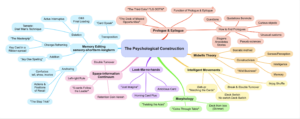
Mine, titled “The Psychological Construction,” dealt with the principles that prevent an intelligent spectator from reverse-engineering the secret of a trick. It was held on Friday morning, before the convention’s regular activities began, and was structured as an intensive small-group session limited to twenty participants.
Starting from the premise that theory is about knowledge and understanding, while practice is about implementation, I selected seven concepts from my book Sharing Secrets. I then discussed each of them by means of at least one trick and several techniques illustrating the respective principle.
This approach—explaining a strategic concept through a trick and/or a technique—is, in my experience, the most effective way for me to teach, and for students not only to understand a principle but also to internalize it and eventually apply it to their own work.
By now, I have seen quite a few lecturers desperately trying to teach “theory,” but failing to do so because they do not demonstrate how the theoretical concept can be directly applied to the performance of a trick or the execution of a sleight.
After all, what good is a theory if one does not know what to do with it?
If you are curious about the subjects we explored, the mind map below may enlighten you … a bit – PDF of it HERE:
Comments on the Program
The lineup featured five principal headliners: Luke Jermay, Mario López, Víctor Piña, yours truly, and our host, Ondřej Pšenička.
One particularly interesting event, which, to the best of my knowledge, had never been attempted at a magic convention before, was the “Fool Us Competition,” with Ondřej and myself serving as judges.
We had eight finalists, of whom only Nandy Kudry managed to fool us successfully. However, I should add that all the other participants also offered interesting and entertaining contributions.
In any case, the format proved to be a real crowd-pleaser, and I would not be surprised if some future organizer of a smaller convention adopted the idea.
Luke Jermay’s One-Man Show
On Friday evening, Luke Jermay presented a full-length solo show.
What a pleasure it was for me personally—who feels like a vegan in a steak restaurant when it comes to mental magic—to see someone as talented as Luke move away from mentalism and perform “real” magic!
There was just enough talk to give the performance meaning, and then it was classic magic at its best, enriched by plenty of personal touches from Luke’s creative mind.
In a private conversation over breakfast, Luke revealed that this had been the premiere of the show, and that not everything had worked out quite as planned. However, nobody would have noticed had he not pointed it out himself.
I look forward to seeing version 2.0 of the show at the upcoming Swiss Magic Symposium on November 15 in Baden, Switzerland. (I will report on it in The Magic Memories 234.)
My Lecture: “Creativity in Magic”
Besides conducting the workshop and participating as a judge in the “Fool Us Competition,” I gave a 75-minute lecture in which I attempted to dissect the creative process behind magic routines, moving away from superficial “trick collecting” toward an examination of how a professional actually constructs and refines material.
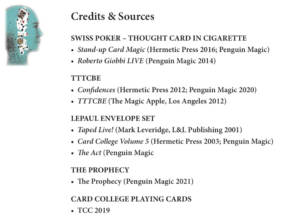
In keeping with my credo that every theoretical idea should be supported by a practical example, I presented four items, each of which served to illustrate a particular technique of creativity that I had employed in developing the respective piece.
In other words, rather than merely showing the finished product, I attempted to reveal part of the thinking that had led to its creation.
See the screenshot below that lists the credits for the four items, which will automatically give you a hint as to what they were.
Ondřej later forwarded me a comment from an attendee, who wrote:
“In Roberto’s lecture I appreciated the deep academic rigor, structured thinking, and historical/conceptual grounding—contrasting the superficial desire for mere ‘foolers’ with a masterclass in how to actually study and elevate the art of magic.”
If only one person came away with this impression, I reached my goal.
Close-Up Gala
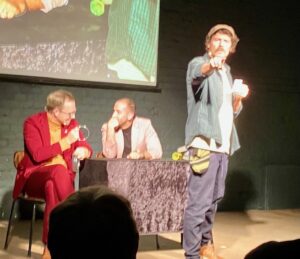
The Close-Up Gala Show served as the crowning finale of the convention. Our host, Ondřej Pšenička, joined forces with the formidable Spanish duo of Mario López and Víctor Piña to offer close-up magic of a very high caliber.
Summing It Up
This was a gathering entirely to my taste, and I wish you had been there.
I sincerely hope that Ondřej will continue organizing this type of convention, one that places artistic quality, intellectual curiosity, and personal exchange above commercial considerations.
After all, there are plenty of conventions where one can buy more tricks. There are far fewer where one comes away with more ideas.
I certainly look forward to the next one.
PS: The photo below shows a group photo taken after breakfast on Sunday, with world-class performer Jade and her husband Matthew, who were attending as visitors.

Envelopes in a Wallet – Why?
As I was preparing my talk on The Creation of Magic (see above), were I use Paul LePaul’s “Cards in a Sealed Envelope” (213), from his book The Card Magic of LePaul (1949), it occurred to me to investigate a bit the origin of the wallet – formerly only used by men – to shed some light on the logic of carrying money, but especially envelopes, in a wallet; why should one do that?
As a result I unearthed some information on the history of paper money and the wallet that I was not aware of and want to share with you (with a little help from the AI research desk):
The Invention of Paper Money (7th Century)
The origins of paper money trace back to 7th-century China during the Tang Dynasty. Carrying heavy strings of metal coins over long distances was both impractical and dangerous for merchants. To solve this, they began utilizing private deposit receipts, which allowed them to leave their cash with a trusted agent in exchange for a paper slip.
These early precursors to banknotes were fittingly called “flying money” because they were light and easily transported.
In the 11th century (Song Dynasty), the central government took control of this system. Around the year 1023, they issued the world’s first official, state-backed paper currency known as the Jiaozi.
Europe adopted paper currency much later. The first European institution to issue official banknotes was the Stockholms Banco in Sweden in 1661.
Shortly after, between 1694 and 1695, the Bank of England began permanently issuing banknotes, which ultimately popularized paper currency across the Western world.
The Original Purpose of a Wallet: A Case for Documents, Not Cash
Before paper money became dominant in the West, people carried their heavy metal coins in small, rounded drawstring pouches attached to the outside of their belts. (Remember the Hieronymus Bosch painting “the Conjuror” from 1502, where a thief cuts off the purse of a spectator watching a cups and balls worker?)
Flat, foldable leather cases emerged in Europe during the early 1600s—and they were originally designed to hold paper documents, not money.
Because paper was a luxury item closely tied to literacy, trade, and legal administration, these cases were primarily used by merchants, lawyers, and the upper class to protect written letters, legal certificates, receipts, and personal calling cards from getting crumpled.
This historical purpose is still perfectly preserved in the etymology of several European languages: • Italian (portafoglio): Literally translates to “carry-sheets” or “carry-pages” (porta = to carry + foglio = sheet/page). • French (portefeuille): Literally translates to “carry-leaves” (porter = to carry + feuille = leaf/sheet of paper). • Spanish (cartera): Derived from carta (letter) – originally meaning a case for carrying mail or letters. • English (wallet): Interestingly, dating back to the 14th century, a “wallet” originally meant a large knapsack, roll, or backpack used by travelers to carry provisions. It wasn’t until 1834 that the word officially shifted in American English to mean a flat case for carrying paper currency.
The Convergence: Document Cases Become Billfolds
When European banks and American colonies started printing the first Western banknotes at the end of the 17th century, the notes were relatively large sheets of paper. They could not be stuffed into traditional drawstring coin pouches without being ruined. Consequently, people naturally began folding their new paper currency and tucking it into the leather document cases and letter folders they already owned.
The Pocket Revolution and Modern Design
Until the late 17th century, Western clothing simply did not have integrated pockets. This changed around 1670, when tailors began sewing pockets directly into the linings of men’s coats, vests, and trousers.
This structural fashion revolution radically altered the design of the wallet: From External to Internal Security.
External coin pouches were easy targets for thieves (giving rise to the term “cutpurse”). Moving valuables inside layers of clothing provided immediate, discrete security.
Bulky, rounded coin pouches were uncomfortable when tucked into tight trousers. Wallets had to become flat, rigid, and rectangular to contour comfortably against the human body.
Early coat pockets were large enough to hold banknotes and letters completely flat against the chest. However, as 19th-century men’s fashion became more tailored and tight, pockets shrank. Wallets adapted by introducing a hinged center fold—creating the modern billfold.
This allowed paper money to be folded in half and slipped discreetly into smaller hip or vest pockets.
Ultimately, the invention of the sewn-in pocket transformed the wallet from an exposed travel sack or bulky document folder into the sleek, highly personalized everyday accessory we use today.
So, if you do any type of anything to pocket, or to wallet, or to envelope and wallet, you now know that this all makes sense and has a historical background.
I find that this type of insight gives performers and their performances more substance and depth, and forms part of what Aristotle called “ethos”, when in his rhetorics he talked about “logos, pathos, ethos”.
Q&A – Patrick Page
Yesterday I was listening to an interview Patrick Page gave on a radio or television program intended for a non-magician audience. The interviewer—a non-magician himself—asked many questions, from which I have selected the five below.
If you try to answer these questions for yourself, I believe you will gain some new insights into how you think about magic, or, at the very least, you will be forced to bring some order to the many things you already know about it.
Either way, I believe you will find this a useful exercise.
From Pat Page – Heroes of Magic 1:
Can you generalize the qualities it takes to be a great magician?
The real secrets of magic have nothing to do with tricks. Comments?
Why are there so few lady magicians?
What makes a good magic act?
Do you have a favorite magician?
Your turn…
AI For Weekly Info
Two The Magic Memories ago, JR Russell asked me to write about the use of AI in magic.
Although I keep AI in my work to a strict minimum, I would be stupid to deny that it can be a helpful instrument, provided the artist masters the instrument, and not vice-versa…
So, here is a task, for which I have employed AI.
As a matter of fact, AI itself suggested this procedure to me, i.e., that it could inform me on a weekly basis of developments in the magic world that are worth my attention.
As always, you have to formulate the correct prompt, but even this was suggested by AI (I use ChatGPT for this), thusly:
Every Friday, give me a concise shortlist of worthwhile new papers, essays, interviews, or substantive analysis on conjuring theory, card technique, and magic history. Prioritize material useful to my writing, lectures, and private coaching, and explain briefly why each item is worth my time.
Certainly, you will want to adapt this to your own interests – obvious, Watson, obvious … or as Garrick Spencer, a wealthy New York attorney for the Woolworth Corporation who was a student, patron, and close friend of Dai Vernon, once said to the latter: “Use your head!” (This then became one of the “Professor’s” mantras; curiously, it was the same Garrick Spencer who gave Vernon the surname “Professor” that stuck for the rest of his life … and beyond.)
This week (week 44 of 2026) AI pointed out six items, all relevant to my work in some way; from these I will share two with you, as they may interest some of you. (Clearly, I will never be able to please all of you all of the time, but hopefully some of you all of the time, and all of you some of the time – thank you Mr. Lincoln.)
First, was an article from The Jerx, an online magazine, that triggered an idea that I might possibly use as a presentational ploy at some point (see “The Daylight Saving Time Prediction” below).
Second, was Allison C. Meier’s article in The Art Newspaper that examines Eric Colleary’s reconstruction of Houdini’s library. A particularly interesting detail is Houdini’s annotated, 53-page catalogue, as well as a rare photograph I was not aware of, with Houdini sitting in his library and studying a book.
You can find the article HERE.
That is not such a bad yield, but as always it requires a little time and work, as nothing comes for free, and there is always a price to pay…
The Daylight Saving Time Prediction
In the article “The Rewitching Time” (The Jerx), the author suggests using the daylight saving time as a presentational hook for a trick. He links this to Halloween, which is a topic that does not resonate with me.
But in the best Agenda-manner, it triggered the following Prologue to a trick you must come up with:
“What time is it?”
“Four o’clock.”
“Four o’clock, Standard Time. Now, if we had not switched back to Standard Time, and Daylight Saving Time were still in effect, it would already be five o’clock, correct?”
“Correct.”
“Now, let us assume that, mentally, I have remained on Daylight Saving Time—and indeed I have!—then I have the advantage of being able to see everything up to one hour into the future. And this is precisely what I intend to prove in the experiment that follows.”
I shall leave it to you to come up with a nice trick to go with this premise.
A possible title—should you ever feel the urge to publish the fruits of your endeavors—might be “The Daylight Saving Time Prediction” … but I sincerely hope you will come up with something more attractive …
(Inspired by an article published in the online magic journal The Jerx, October 30, 2026.)
More AI – No-get-ready Double Lift (Paul Globus)
Talking about AI and how to apply it to magic, here is another case were I found AI’s input informative, when reader Paul Globus wrote via email on 14th SEP 2026:
Hello again Roberto,
Okay, here’s the first move, the “no-get-ready double lift”. The move is actually mine but it was inspired by and based on ideas and and coaching from the great man himself, Dai Vernon. Here’s the story.
It was back in the 1970’s and I was attending a IMB or SAM convention (I do not recall which) at the Waldorf Astoria Hotel in NYC. The Professor was into his eighties but still as sharp as ever, and was one of the highest profile magicians at the convention. He had been lecturing all day and was holding court in his hotel suite in the evening. Many of his oldest magician friends and admirers were there along with a group of assorted hangers-on. I had no business being there but I was acquainted with one his friends, a Montreal magician of Polish descent who went by the stage name of Romaine (and was known as The Monarch of Manipulators) and managed to sneak into the exclusive gathering.
I was a fresh-faced kid in my twenties and didn’t say a word until The Professor noticed me and remembered I had met him several times at lectures he had given in Montreal. As you know, he was born in Canada and took a shine to me, probably because I too am a Canadian. Anyway, I had a deck of cards in my hands and he noticed that I am left-handed. He started to talk about certain moves he felt were easier or more difficult for lefties and about the preferences of other left-handed card magicians he had known. Then the subject of the double lift came up.
He started to demonstrate some ideas he was working on, one of which was a no-get-ready double lift. It looked pretty good and everybody around the table immediately tried imitating him. I did too but couldn’t quite understand what he was doing so instead, I began to fiddle with my own rough idea of a no-get ready double lift that involved riffling the deck on the inner, as opposed to the outer, edge. The Professor, who didn’t suffer fools gladly, looked at me and said in his distinctive, squeaky voice, “Well, Kid (that’s what he called me), that’s an interesting idea and I think you should work on it.” Then he addressed the other magicians in the room. “You see fellas, you gotta be creative, like the Kid here.” He turned to me and said: “Now you go home, Kid, and practice that move for a couple of years and next time I see you, you show me again, okay?” He died before I got a chance to meet him again but I took his advice and did practice the move until it became second nature. I have used that double-lift successfully for decades now.
A video is attached. Note that there’s no break or get ready. You just riffle up the deck’s left side near the inner left corner until you reach the top two cards, pinch them between the thumb and fingers, and lift them off the deck in a single motion, like opening the page of a book. It’s quite easy and with only minimal pressure, the cards always stay together. Keeping the hand in motion is what really sells the illusion as it seems impossible that more than a single card is being displayed.
There’s a slight snapping sound, which happens naturally, and is a nice added touch. The clincher happens when you seemingly “toss” the double back onto the deck.
You can do a whole series of perfect double lifts, one after the other, using this method (there’s an effect by Paul Harris, which is called Reflex, I believe, that this double-lift is perfect for). What do you think?
I recorded the video several years ago and apologize for the poor quality. A write up and a video of the Garcia false cut to follow later or tomorrow. Be well.
Paul
I do not doubt that Paul came up with the handling of the Double Lift described above, as the story and procedure described makes perfect sense to all of us who have experienced similar situations in the past.
However, I was sure to have seen – and even practiced for a while – this handling before. But where and when?
To find a possible source I asked Gemini the following question:
“Who came up with the idea of doing a Double Lift or Double Turnover by holding the deck in left hand Dealing Position, riffling off the cards at the left side near the inner left corner and then turn the two top cards as one face up?”
Gemini answered:
The technique you are describing—performing a breakless Double Lift by holding the deck in a left-hand dealing position, riffling or counting the cards on the left side near the inner left corner, and turning the top two cards as one—is credited as the foundational evolution of the Strike Double Lift (historically called the Hit Double Lift).
The original idea for this specific handling belongs to an itinerant American magician named Bennett (whose first name is unknown to history).
The History of the Sleight
While the concept of the Double Lift dates back to Richard Neve in 1716 and the modern Double Turnover was popularized by Arthur Finley in the 1920s, magicians typically relied on a preformed “get-ready” or pinky break.
According to magic history recorded by master magician Nate Leipzig in his autobiography, he met Bennett in 1904:
“This man showed me one thing that he didn’t teach and that was the double lift. I had never seen it before and this was in 1904… He lifted from the left side without getting set for it and only quite recently I changed to the right side.”
Evolution of the Move
Bennett’s Original (1904): Held the deck in the left hand and used the right hand to hit/riffle the left side near the inner left corner to instantly take two cards as one. [1]
Leipzig & Dr. Jacob Daley: Leipzig adopted Bennett’s left-side hit method and used it for decades before later shifting the point of contact to the right side of the deck. Dr. Jacob Daley also famously refined this breakless execution. [1]
The Modern Strike Double Lift: Over time, the magic community largely mirrored this mechanic to the outer right side of the deck (often running the right index finger down the right beveled edge to feel two cards), but the foundational breakthrough of a breakless, tactile edge-count came directly from Bennett’s turn-of-the-century left-side handling.
RG Final Comment
Again, a good use of AI, I would say… BUT, where did Gemini find this information? Fortunately, if you turn on the respective function, AI will reveal its source, which in this case is … Behr’s Conjuring Credit site (not the Conjuring Archive, but attached to it), and if you enter “Hit Double Lift”, you will be directed to THIS RESULT.
So, you ask, why should one use AI instead of going directly to one of the known magic archives (CARC, Behr’s, Learned Pig, etc.)?
Well, if you go to any of these archives, you will indeed find the complete (?) information, on which AI draws from, but you have to know the exact term to search for, in this case “Hit Double Lift”, which is precisely what you do not know most of the time when doing a research of this type,
In contrast, you can ask AI an open question that describes the problem for which you seek a solution (see my prompt above), and it will then point you to the entries in the archives (not always, but often).
To understand this distinction, is a further step toward using AI in a purposeful way.
I thank Paul Globus for allowing me to share this information with you.
Further AI … As a Lecture Aid
Here is yet another way of putting AI to good use, and it comes compliments from my friend Rafael Ferré Manresa of Reus (the natal city of Antoní Guadí). We both attended the lecture given by Ignacio López at the Magialdia convention (see The Magic Memories 232).
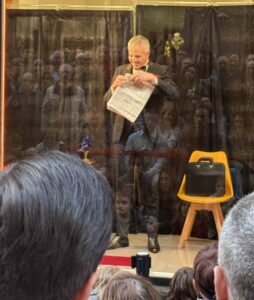
I saw Rafael taking notes at the lecture, and asked him what use he would make of them. That is when he explained to me the following procedure in his own words (translated from Spanish, courtesy ChatGPT):
Recording: During Ignacio’s lecture, I recorded the talk directly using AI. I use the paid version of Claude, as it allows for more extensive use. Alternatively, you can simply record the audio with your smartphone’s recording app and then upload the file to Claude or any other AI.
Summary: I asked the AI to produce a summary of the lecture.
PDF: Once the summary was completed, I asked the AI to turn it into a PDF document.
Proofreading: After downloading the PDF, I carefully checked it for errors and corrected them manually, especially proper names. For example, the AI had transcribed “Decremps” as “De Kremps,” and several other names were also incorrectly rendered. Since I had attended the lecture myself, I was able to identify most of them. For the remaining ones, I consulted Ignacio, who kindly supplied the correct spellings.
The final result is the document I sent you.
With Rafael’s kind permission, and hoping that some of my readers will get Ignacio’s most interesting and well-made publication, HERE IS the final PDF for your perusal.
PS: The complete title of Ignacio López’s book is: La Pila: Cinco siglos en un juego de magia (The Coin Stack: Five Centuries in a Magic Trick), published by Mystica (Spanish).
The subject of the book is the history, development, and techniques of the Coin Stack, also known as Cap and Pence, Stack of Quarters, and Cylinder and Coins.
The book is the result of more than seven years of research, drawing on over eighty historical sources, including books, manuscripts, magazines, and catalogs.
You can buy the book HERE.
You can also buy it from the author directly from his webshop HERE, where he also sells a shorter booklet entitled Cylinder and Coins, with an English-language option. This is a separate publication, not an English translation of La Pila.
Very best wishes,
Roberto Giobbi